
Forever Ago collectibles include seven petal vignettes, six resting opportunities, optional scene objects, and photographs you choose for Alfred's journal. The vignettes are distributed across the gas station, diner, and pirate resort. Find their local petals, locate the gathering point after the unlock message, and use the camera to reveal each memory. Rest opportunities require their own interactions; sitting, lying down for a nap, and using Take In View at the resort railing are distinct actions. Merely photographing the location does not activate its rest interaction.
The game also contains one-off discoveries and story photographs. Keep those categories separate. A chapter ending, a growing camera count, and a completed vignette are different results, so none should be used as a universal proof that every optional discovery at a stop is finished.
Collection categories and their completion cues
| Category | What you look for | Action that matters | Practical completion cue |
|---|---|---|---|
| Petal vignettes | Named clusters around landmarks | Inspect petals, find the gathering, reveal the memory | The camera interaction shows the vignette |
| Resting opportunities | Benches, sofa, pool loungers and the resort lake-facing railing | Activate the displayed rest action | The resting interaction plays |
| Story photographs | The subject named by the current scene | Take the requested picture after prerequisites | The scene or objective advances |
| Journal photographs | Pictures taken during the travel day | Select and place the available pictures | The journal step is completed |
| Optional objects | Notes, curiosities and other inspectable items | Use the relevant inspect or collect action | The object interaction is completed |
| Scene challenges | A particular subject, timing or interaction | Perform the named action in that scene | The relevant achievement or scene state responds |
A useful collection route follows the road stops and records those outcomes individually. It does not turn every photograph into a separate hidden collectible or assume every visible chair counts as a resting place.
Seven vignette memories across three stops
The seven vignettes divide into two at Karl's Pump 'N' Mart, two around the Highway Star Diner, and three at Captain Marley & The Buccaneers' Retreat. Their names and landmarks provide a compact route through the optional memories.
| Stop | Vignette | Landmark pocket |
|---|---|---|
| Gas station | Fun & Colors | Playground swings, picnic table, slide and sandpit |
| Gas station | The World's Largest Mosaic Pumpkin | Large pumpkin and information board |
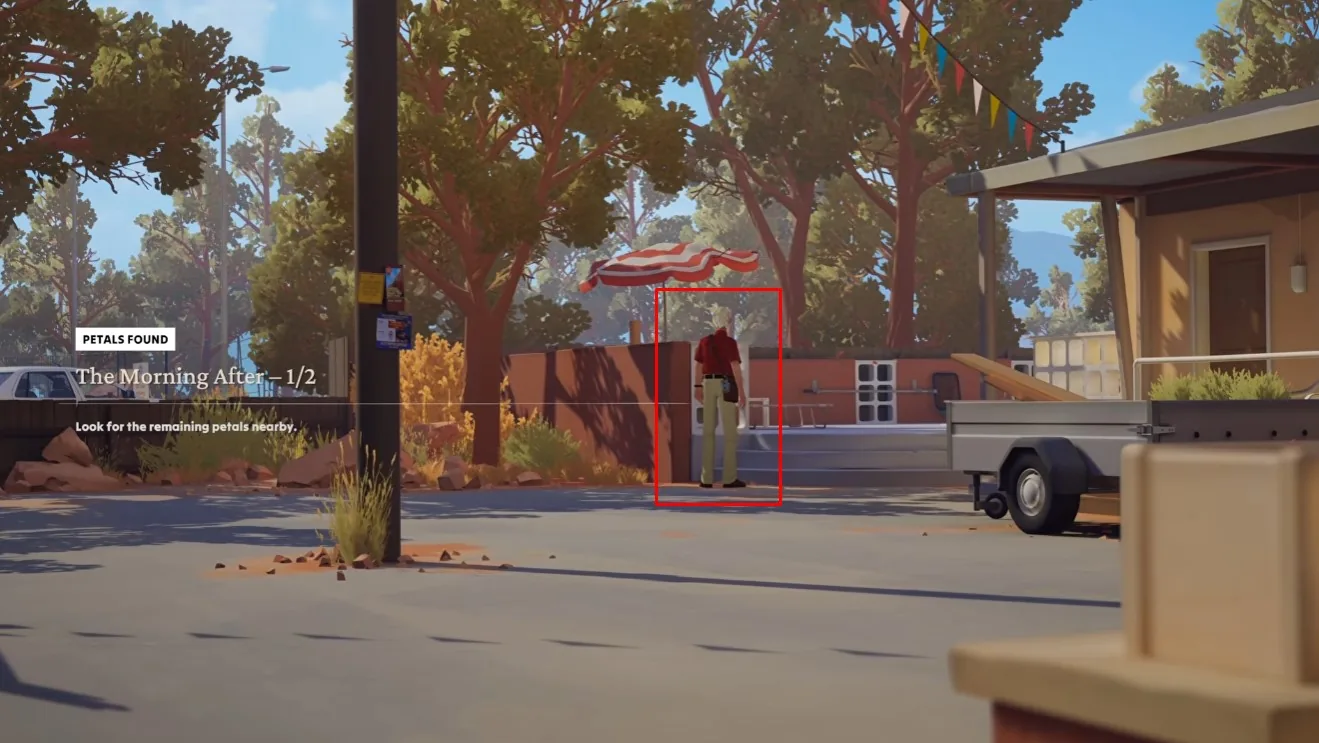
| Diner | The Morning After | Motel swimming-pool edge and furniture |
| Diner | Seeking Shelter | Diner terrace stairs and entrance |
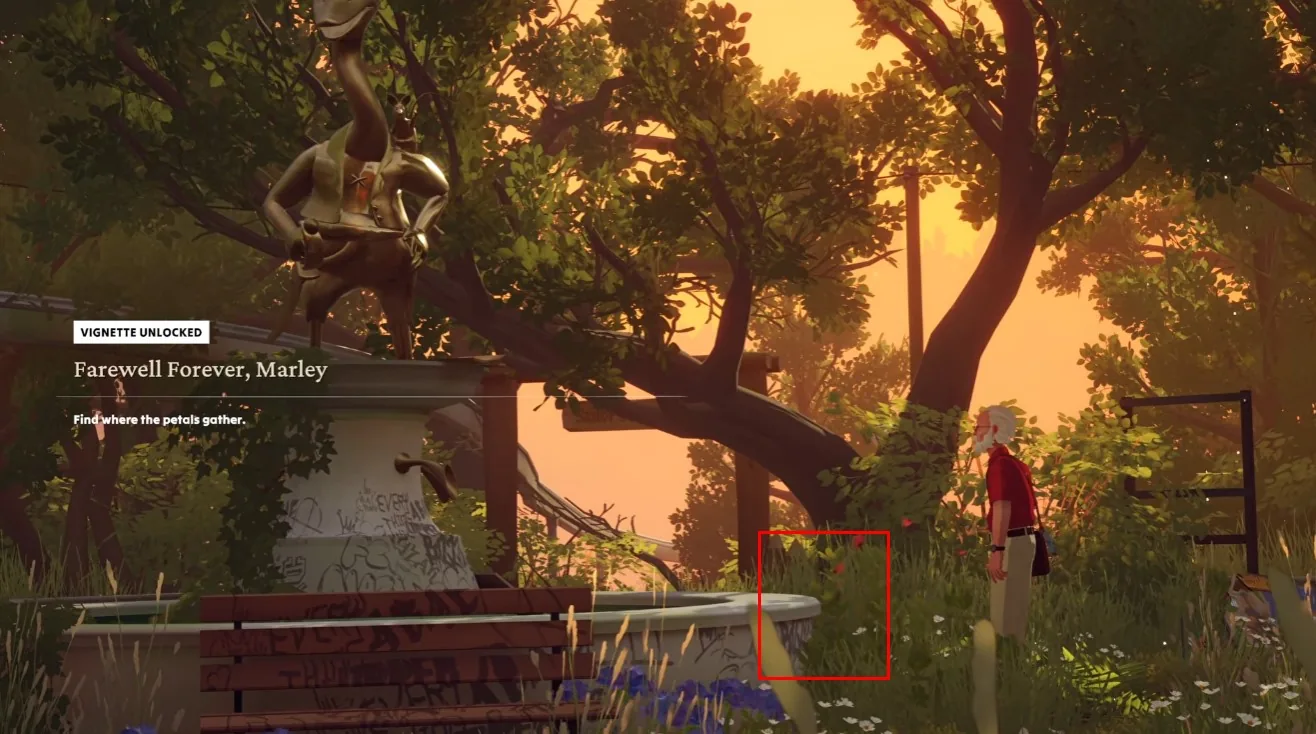
| Resort | Farewell Forever, Marley | Graffiti area and pirate statue |
| Resort | It's Tradition | Pirate photo cutout and adjacent benches |
| Resort | Responsible Adults | Harbor buildings and wooden platforms |
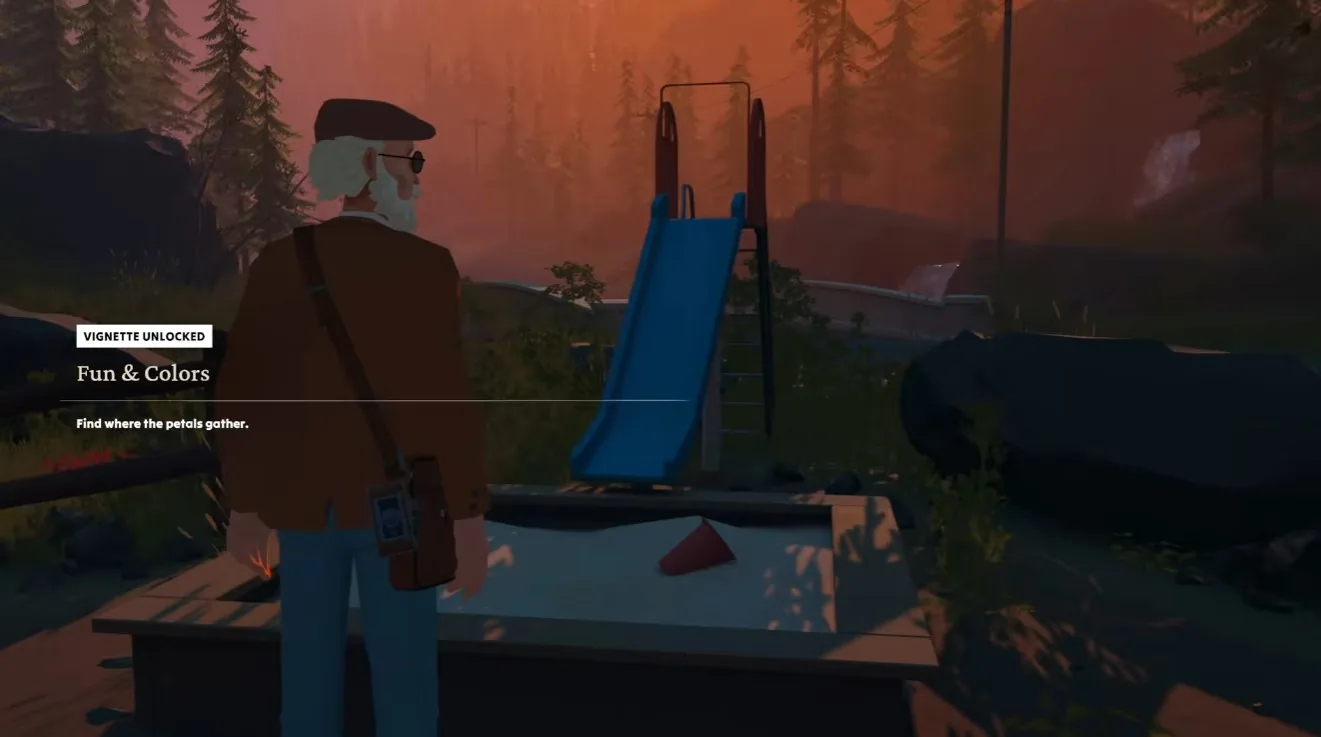
Treat the named local counter as the search boundary. Fun & Colors uses three petals; the pool and diner-entry memories use two each; the statue memory uses two; the photo-cutout and harbor memories use three each. For the pumpkin, follow the fraction shown by the current game rather than adding an assumed total.
After the vignette unlocks, finish the gathering-point camera action. The unlock message opens the next step. If you leave at that message, you have collected the pieces without necessarily revealing the memory you intended to find.
Clear the gas-station exterior before checkout
At Karl's Pump 'N' Mart, check the playground and pumpkin display while the exterior is available. The playground gives you three clear objects to work around: swings, a table near the fence, and a blue slide with sandpit. The pumpkin uses the large sculpture and its information board.
Inside the shop, inspect the objects that interest you and use the prompted resting seat if you are collecting rest interactions. The store has many products, but the necessary shopping list is cookies, windshield wipers, and the road atlas. Collecting those supplies is a story requirement, not evidence that every optional object has been checked.
The atlas near the toilet-paper section shares its area with an old hanging photograph. Use the photograph as a landmark, then perform the actual atlas interaction. Taking a picture of the shelf does not put the item in the basket.
When you have finished the optional checks you want, return to Milton and complete checkout, including the memory interruption and final payment. The campsite afterward is the photograph-selection opportunity. Keep exterior vignettes, shopping completion, and journal placement as separate entries in your route.
Divide the diner into pool, entrance and rear area
The Highway Star Diner has two vignette pockets. The Morning After is around the motel pool: inspect near the steps and striped umbrella, then beside the slide and green fence. Seeking Shelter is at the terrace stairs and glass entrance.
The dog behind the restaurant belongs to Maddy's request. Investigate the rubbish area, photograph the dog, and report back to her. That grants booth access and leads to a required photograph through the window. Neither camera action replaces the two optional petal memories around the pool and entrance.
Resting opportunities are also part of this stop. Use seats that actually offer the resting action, and allow their interactions to complete. If you are checking the resting-place collection, distinguish those optional pauses from merely standing beside a bench or taking a photograph of the outdoor seating.
Before the final booth photograph, review the tasks by zone: motel pool, restaurant approach, interior, and rubbish area. That organization keeps the collection search compact and makes it easier to see whether a missing task is a vignette, a seat interaction, or a story photograph.
Explore the resort before boarding the boat
Captain Marley & The Buccaneers' Retreat contains three vignettes and several optional object interactions. Work around the pirate statue, photo cutout, and harbor platforms for the petal memories. At each pocket, finish the gathered-petal camera stage before moving to another building.
The resort's notes and newspaper material are a separate discovery route. Inspect readable papers when the prompt appears, including objects on tables, shelving, and other accessible surfaces. These contribute information about the place; they are not petals, and a photograph of a paper does not replace a read interaction.
The resort also has a required arcade task and a separate high-score challenge. Playing the Guardian Lord machine advances the story objective even if you do not beat the record. A collection plan should distinguish the required attempt from a challenge that asks for a better score.
Use the bolt cutter to open the story route and reachable side areas as appropriate. Before boarding the boat, check the optional notes, object interactions, resting action, and three shore-side vignettes you intend to complete. The boat photograph and island memory are main-story actions and do not prove those earlier discoveries were finished.
Track the six resting opportunities separately
The resting-place route contains six opportunities: two at the gas-station stop, three around the diner stop, and one at the resort. The relevant action is using the rest interaction. A decorative chair or a seat used for another scene should not automatically be added to the count without the appropriate prompt.
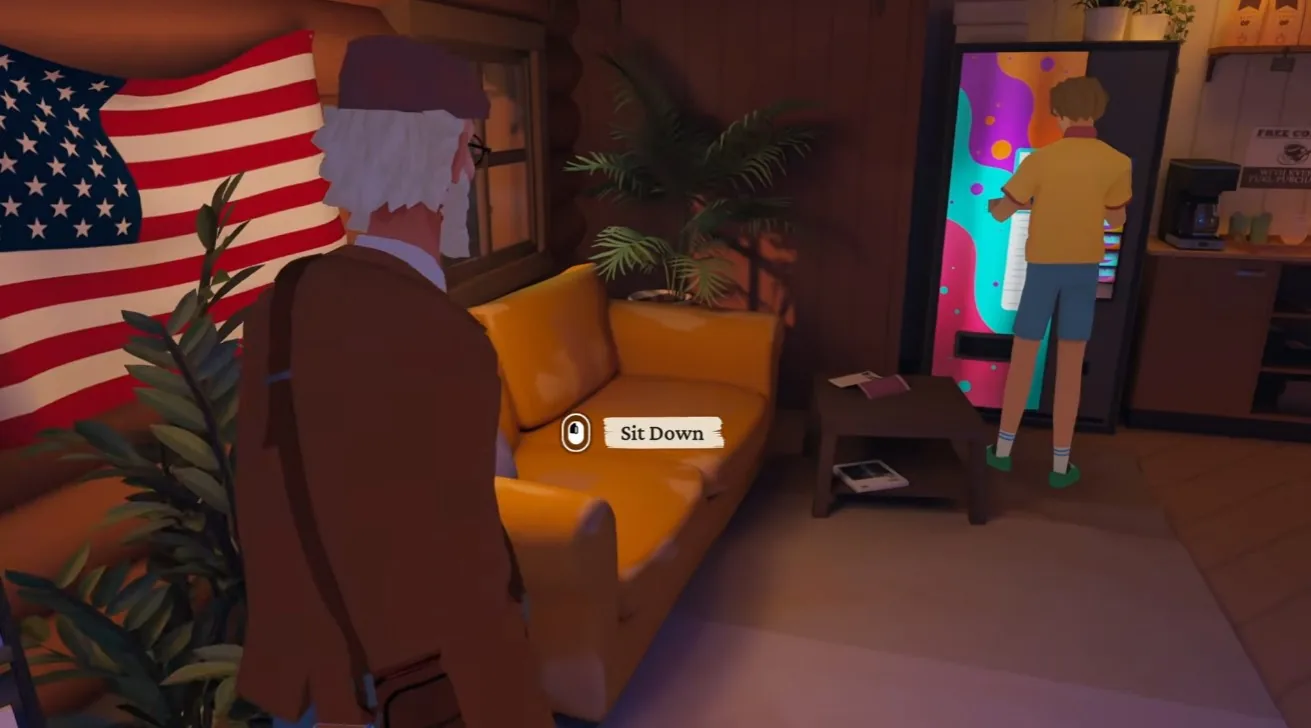
Five rest opportunities involve sitting or lying down. The final opportunity is at the resort lake-facing railing: use Take In View and let Alfred pause there. A chair is not required for that sixth interaction.
At a resting seat, position Alfred so the interaction is available and use it. Let the pause finish before moving on. If you are uncertain whether you already used a particular seat, note its landmark rather than relying on a camera photograph of the furniture.
The rest distribution helps identify where a missing interaction may belong, but it does not replace checking each rest interaction. Finding all seven vignettes says nothing about whether all six rest opportunities were used. Both routes can occur at the same road stops while requiring entirely different actions.
Keep a separate state for each rest location: found, used, or uncertain. That is more informative than marking a whole chapter complete merely because its main story advanced. For exact directions to all six interactions, keep the resting-place task distinct from the vignette landmark search.
Treat camera pictures as records, not a fixed scavenger list
The camera serves several purposes: opening tutorials, required scene photographs, optional vignettes, selfies, and personal landscapes. Broad photography milestones count pictures, while subject-specific tasks care about what and when you photograph. A collection plan needs both distinctions.
The opening room offers the manual, teddy bear, wall photographs and calendar before the window shot of Alfred. Later, the diner dog, booth view, selfie with Sam, boat picture and lighthouse sequence supply specific camera moments. Optional scenery can sit alongside those photographs without turning every landscape into a numbered collectible.
At the journal opportunities, choose from the pictures available in the current interface and finish their placement. The decision to keep a picture is a separate action from taking it. Follow the displayed capacity rather than assuming that a claimed film limit applies universally to every scene and platform.
A useful journal record contains different subjects, but variety is a personal choice. It is not a hidden requirement to keep one person, one landscape and one object on every page. Do not replace clear task conditions with an invented scrapbook formula.
Keep optional home objects separate from road memories
The epilogue returns Alfred to the house. Inspect the interactable objects as you move through the rooms and continue the dinner sequence. The home also has mosaic-pumpkin discoveries that belong to a separate optional task, rather than the giant-pumpkin vignette outside the gas station.
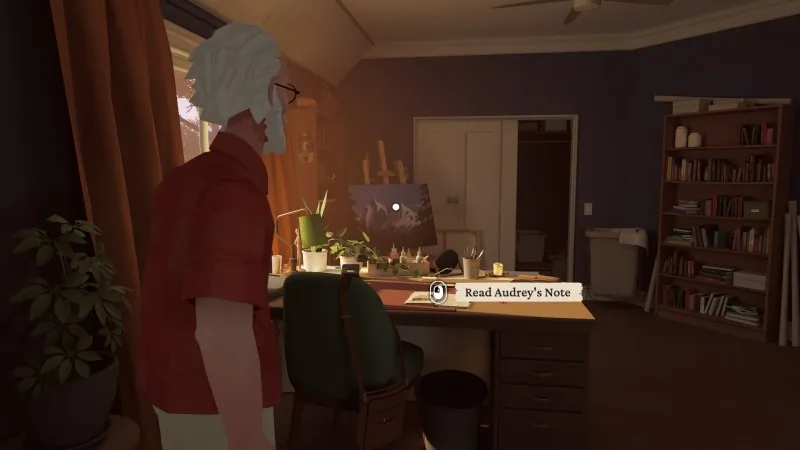
This distinction prevents a familiar object theme from collapsing several tasks together. The large sculpture memory uses petals and a camera reveal. Small home pumpkins use their own discovery interactions. A completed photograph of the gas-station display does not establish that the home collection is finished.
Finish the epilogue's available interactions deliberately instead of treating the first kitchen task as proof that all optional objects were inspected. At the same time, use actual prompts to bound the search. Ordinary scenery without an interaction is not evidence of a hidden pickup.
Use a departure check that preserves task boundaries
Before a road stop closes, check the vignettes you revealed, resting interactions you used, objects you inspected, and story photographs you completed. Then finish the journal action presented by the scene. That order makes optional collection progress reviewable without obscuring the required route forward.
For a missing vignette, return to its landmark and current collection state. For a missing rest, check the relevant rest interaction. For an unfinished story picture, check its subject and prerequisites. A delayed platform notification should not lead directly to deleting a save or replaying unrelated chapters. Record the action actually completed and assess the state from a stable point, keeping each collection system distinct.