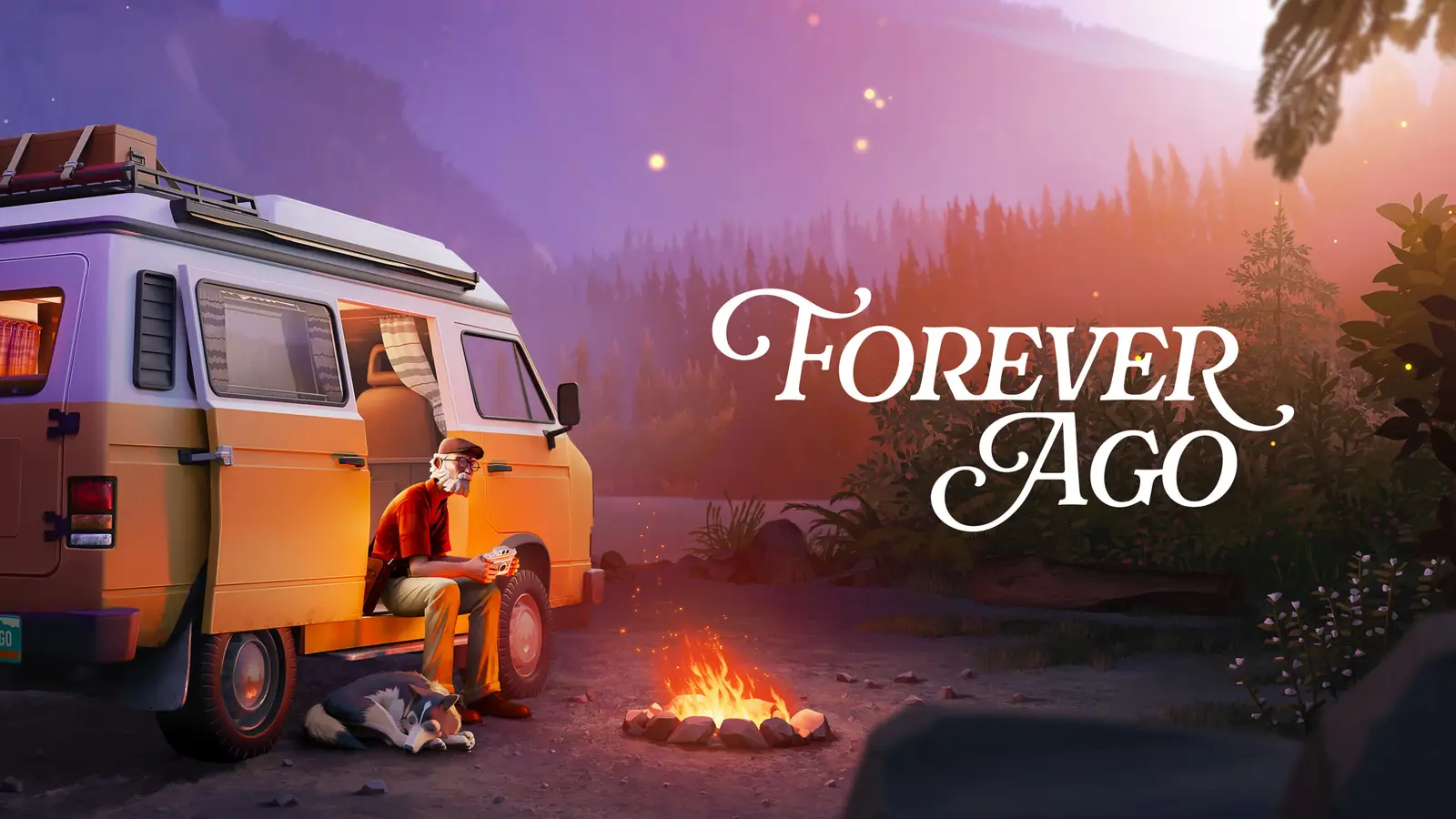
The Forever Ago dog photo needed for the diner story is behind the Highway Star Diner. Speak to Maddy after checking the restricted booth, leave the restaurant, turn right through the fence, inspect the hole and rubbish area, and photograph the dog beside the bins. Return to Maddy to finish the request and gain access to the booth.
There is also a different dog-photo action at Winslow Lighthouse: when the camera is aimed toward a bird's nest, lower the framing to photograph the dog instead. These are separate scene tasks. A picture taken for Maddy at the diner does not replace the later lighthouse subject, and a random companion photo elsewhere is not automatically either one.
Choose the route that matches your current scene
| Current place | Dog-photo purpose | Position to use | Next step |
|---|---|---|---|
| Highway Star Diner | Resolve Maddy's investigation request | Behind the restaurant at the rubbish bins | Speak to Maddy again |
| Diner booth | Continue the story after Maddy's request | Seated at the permitted booth | Photograph the outside view, rather than another dog shot |
| Winslow Lighthouse walk | Photograph the dog instead of the bird's nest | The prompted nest-photography moment | Lower the view and use the dog as the subject |
| Other companion scenes | Personal road-trip picture | Any accessible scene where the camera is available | Keep or discard through the normal photograph interface |
Use the place and active request to identify the necessary action. The animal is part of several scenes along the road, so the fact that a picture contains a dog is not enough to tell you which task it belongs to.
Reach Maddy's request at the diner
At the Highway Star Diner, Alfred has several objectives. Find Audrey's flowers through the fence near the van and telescope, play Green Green Grass of Home by Patti Page on the jukebox inside, and check the booth. The booth requires membership privileges, so Alfred cannot simply use it on arrival.
Speak to Maddy at the counter after the access restriction is established. She gives Alfred a favor to complete before he can use the seat. This conversation connects the animal investigation to the booth route and gives the dog photograph its story purpose.
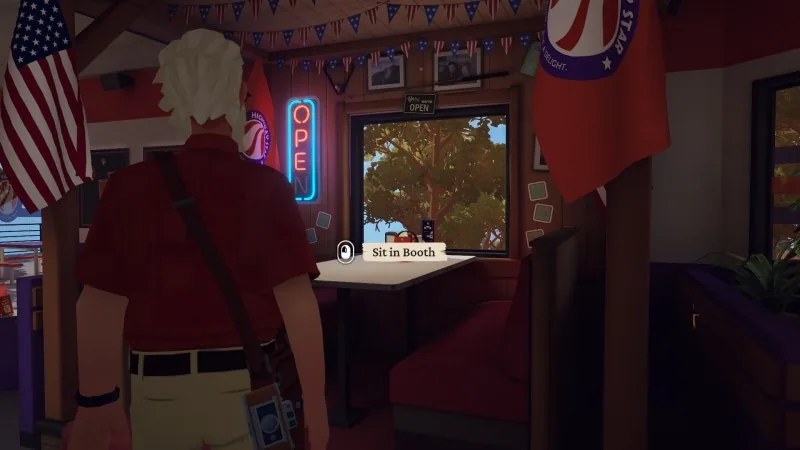
If you are still standing beside the jukebox or flower patch, taking a dog picture is not the only task to consider. Check the active objective and conversation. The diner combines different interactions, and the camera does not substitute for choosing the song or picking the flowers.
The flowers near the telescope are especially easy to confuse with the route behind the building. Both involve going outside and passing a fence, but their landmarks differ. The telescope route is for Audrey's flowers. The dog route leads to rubbish and bins after leaving the diner to the right.
Follow the right-side fence route
Exit through the diner entrance and turn right. Pass through the nearby fence and continue toward the rubbish-covered area behind the restaurant. Investigate the hole and the trash to reach the dog encounter.
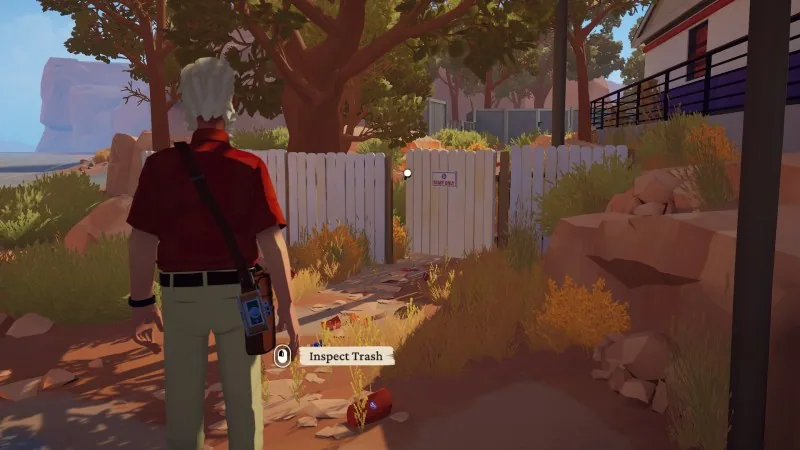
The hole, litter, bins, and fence identify the correct pocket. You are not looking for the motel pool, a distant animal shelter, or the flower patch beside the telescope. If you become disoriented, return to the restaurant door, face outward, and follow the right-side route again.
Use the investigation interactions before focusing on the camera. They establish what Alfred finds in the area. A photograph taken while the encounter is still waiting for inspection can leave the story task unfinished, even if you have already documented the correct bins.
There is no supported requirement to collect a petal cluster to reveal the dog. Optional diner memories use their own local petals around the pool and front approach. This request is an investigation followed by a photograph of an animal in the rubbish area.
Frame the animal beside the bins
Take out the camera and aim at the dog. The animal is visible beside the rubbish bins and fence. Keep it clearly inside the view rather than filling the picture with a large bin or the patch of litter that first drew your attention.
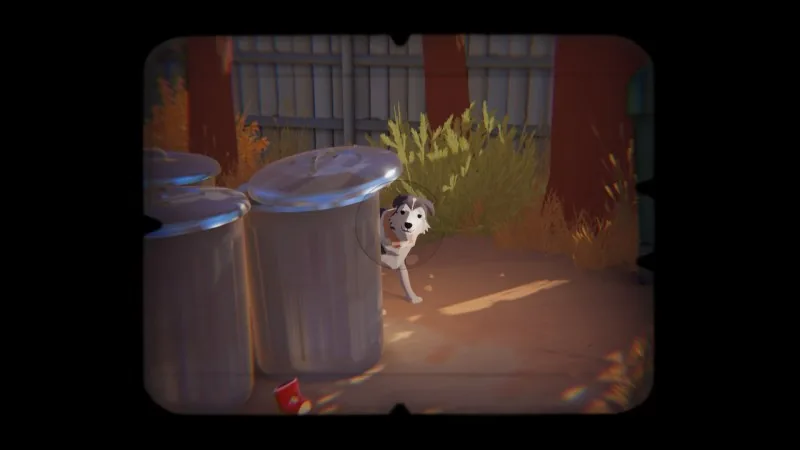
The distinction between landmark and subject is the main practical check. The bins tell you where to stand and look; the dog is what the request needs. A picture of the correct corner can still miss the animal if the framing is too high, too far to one side, or blocked by the bins.
If you are unsure about the picture, lower the camera and look at the scene normally. Confirm that the animal is present, then raise the camera toward it again. A small position adjustment can make the subject easier to see without changing areas or repeating the whole diner route.
You do not need to invent a photography score or a special artistic composition for this action. The supported requirement is the dog photograph. Concentrate on including the requested subject and following the scene response, rather than trying to maximize the amount of scenery in the frame.
Return to Maddy after the photograph
Go back inside the diner and speak to Maddy. Reporting the investigation completes the request and gives Alfred permission to use the booth. Do not remain outside waiting for the photograph to move the story into the restaurant automatically.
This return conversation is the clearest distinction between taking the picture and finishing the favor. The camera action provides the requested image; the report resolves the access step. If the booth remains restricted, check the conversation before taking several more identical animal pictures.
Once the seat is available, go to the booth and sit. You can handle available photographs in the journal there, and the scene eventually asks for a picture through the window. That exterior-view photograph begins the main memory with Audrey.
The window photograph is not another dog photograph. Maddy's request has already served its purpose. At the booth, follow the camera prompt toward the scenery outside, then continue the new story scene after the transition.
Find the later lighthouse photography moment
The second dog-photo action is later at Winslow Lighthouse. The chapter includes the animal-shelter stop, morning coffee and feeding, the encounter with Charles, and the walk toward the landmark. These place you in a different part of the road trip from Maddy's diner favor.
Follow Charles during the walk. The chapter has a photography sequence when he sits, followed by continued travel toward the lighthouse. Keep responding to the current scene rather than treating every pause as the dog-instead-of-nest action.
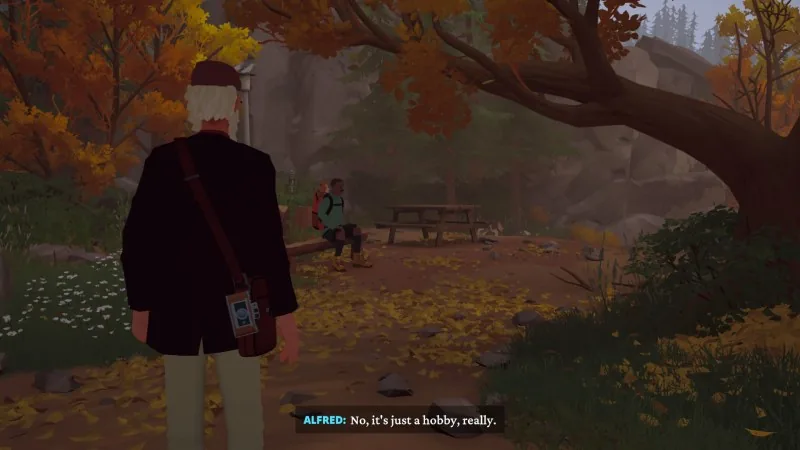
The useful cue for the specific dog shot is Alfred turning his attention to a bird's nest. At that photography moment, lower the camera view and make the dog the subject. The instruction is about choosing a different subject in the same scene, not returning to the diner or finding another stray animal.
Because the chapter includes Charles and more than one dog in its conversations, use the animal shown by the current camera scene rather than guessing from a name alone. The practical requirement is visible subject selection at the nest moment.
Lower the framing from the nest to the dog
When the nest is the initial target, the camera naturally draws your attention upward. Move the view lower until the dog is visible and photograph the animal instead. This is the key difference from simply completing the obvious nest picture.
Keep the two subjects separate in your own check. A nest photograph records the nest, even if the dog is somewhere nearby outside the frame. The dog photograph requires that the animal becomes the subject of the shot.
If you already took the nest picture and still have control of the camera in that moment, check whether the scene continues to offer the animal view before assuming you must replay a whole chapter. Use what the current scene permits. This guide does not promise a universal recovery window after every transition.
The nearby path and lighthouse are orientation landmarks, while the prompted moment provides the opportunity. Taking an unrelated picture of the dog much earlier during the walk is a personal photograph and should not be assumed to satisfy the scene-specific action.
Distinguish required dog pictures from companion activities
The dog also accompanies Alfred through other parts of the road trip. You can play with it by throwing sticks on the field walk with Sam and along later routes. Those are companion interactions, not substitutes for either dog-photo task.
Similarly, feeding the dog at the lighthouse morning is a different action. Finish it through the food interaction when the scene requires it, then continue the photography route. A picture of the bowl does not feed the animal, and feeding does not complete the later camera subject choice.
At Williamina Peak, searching for the missing dog follows tracks in the snow and uses calls while you follow the route. That search should not be confused with finding a photo location. The required diner picture is behind the restaurant; the mountain sequence belongs to a later story task.
This separation keeps a focused photo checklist useful: diner investigation picture, return to Maddy, later dog-instead-of-nest picture. Other moments can be part of your personal journal, but they have their own interactions and outcomes.
Check a dog-photo problem without erasing progress
For the diner, check four stages: Maddy's request was heard, the rubbish area was investigated, the dog was photographed, and the result was reported. If one is missing, complete that stage before repeating the entire loop. If all four are finished and the booth is available, the dog favor has done its job.
For the lighthouse, check the scene and subject. You need the nest-photography moment and the dog framed instead of the nest. A general companion picture from another stop does not establish completion of that specific action.
If an interaction is difficult to trigger, lower the camera and reposition slightly before trying again. Keep the visible animal and current request as your reference. Do not delete a save to force a picture to count, and do not assume that a delayed platform notification proves the photo failed. Use the immediate story access or subject response first, then assess the recorded state from a stable point in the game.