
Forever Ago chapter 2 photos belong to Karl's Pump 'N' Mart, the gas-station stop after Woolson Falls. Check the playground and mosaic pumpkin outside for petal memories, then explore the store before finishing the checkout scene. The old photograph near the toilet-paper and road-atlas area is a story landmark. At the campsite afterward, select photographs for the journal before continuing the trip.
The shop chapter mixes three activities: buying the supplies Alfred needs, discovering optional vignettes, and taking personal photographs. A picture of an interesting shelf does not buy a supply, and a photograph of the pumpkin does not replace its petal interaction. Keep those activities separate to understand what is still unfinished.
Organize the stop by photo subject
| Area | Useful subject | Action to check | Type of result |
|---|---|---|---|
| Playground | Swings, picnic table, blue slide and sandpit | Inspect the nearby petals, then find the gathered petals | Fun & Colors vignette opportunity |
| Pumpkin display | Large mosaic pumpkin and information board | Inspect the petals around the display | The World's Largest Mosaic Pumpkin vignette opportunity |
| Store | Shelves and objects connected to Alfred's recollections | Photograph subjects you want to keep | Personal road-trip pictures |
| Atlas section | Old hanging photograph near toilet paper | Use it as a landmark while obtaining the atlas | Story context and shopping progress |
| Checkout | Milton and the old-photo scene | Finish the purchase sequence and its memory | Main-story progression |
| Campsite | Photographs collected during the stop | Choose pictures and place them in the journal | Travel-day record |
The two named exterior memories are not the same as the story recollection at checkout. You can finish shopping without treating every optional memory as a shopping requirement. Conversely, arriving at the campsite does not prove you found all of the exterior memory subjects.
Check the playground before focusing on the shop
The playground gives you a compact group of visual landmarks. Look for the swings, nearby picnic table, and the blue slide with its sandpit. Petal interactions in this area belong to Fun & Colors. The counter shown for that vignette is three petals, so an early one-of-three response tells you that the nearby search is still in progress.
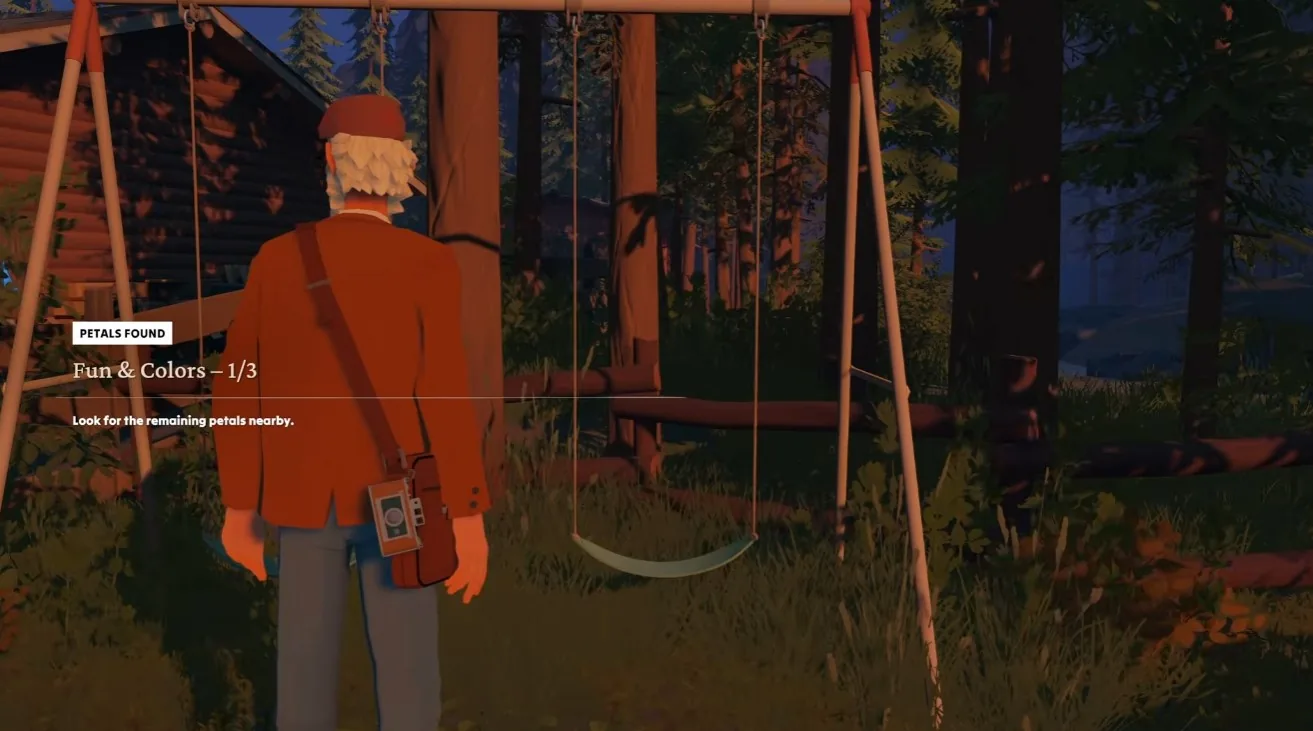
Inspect the petals at the swings and continue around the picnic-table side. Keep the playground equipment in view while you search, rather than following the road away from the stop. The clues belong to the same small area, and the named counter helps distinguish them from another memory elsewhere at the gas station.
The blue slide and sandpit identify the final part of the playground search. When the vignette unlocks, the game asks you to find where the petals gather. That instruction changes the task: you are no longer merely accumulating another pickup. Locate the gathering point and use the camera interaction there to reveal the memory.
A normal photograph of the slide can be a personal picture, but it is not a substitute for this sequence. The playground memory begins with inspecting petals and proceeds through the unlocked vignette. If the counter still shows an incomplete fraction, keep searching the playground landmarks before trying to solve the problem by taking more landscape shots.
You can use the three landmarks as a simple local route: swings, picnic table, slide and sandpit. The route is useful even if you approached from a different side, because it is based on objects you can see rather than an assumed compass direction.
Visit the mosaic pumpkin display
The large pumpkin outside the shop is the anchor for The World's Largest Mosaic Pumpkin memory. Find the information display and inspect the petals on the ground nearby. Continue around the pumpkin until the vignette unlocks, then follow the instruction to find the gathered petals.
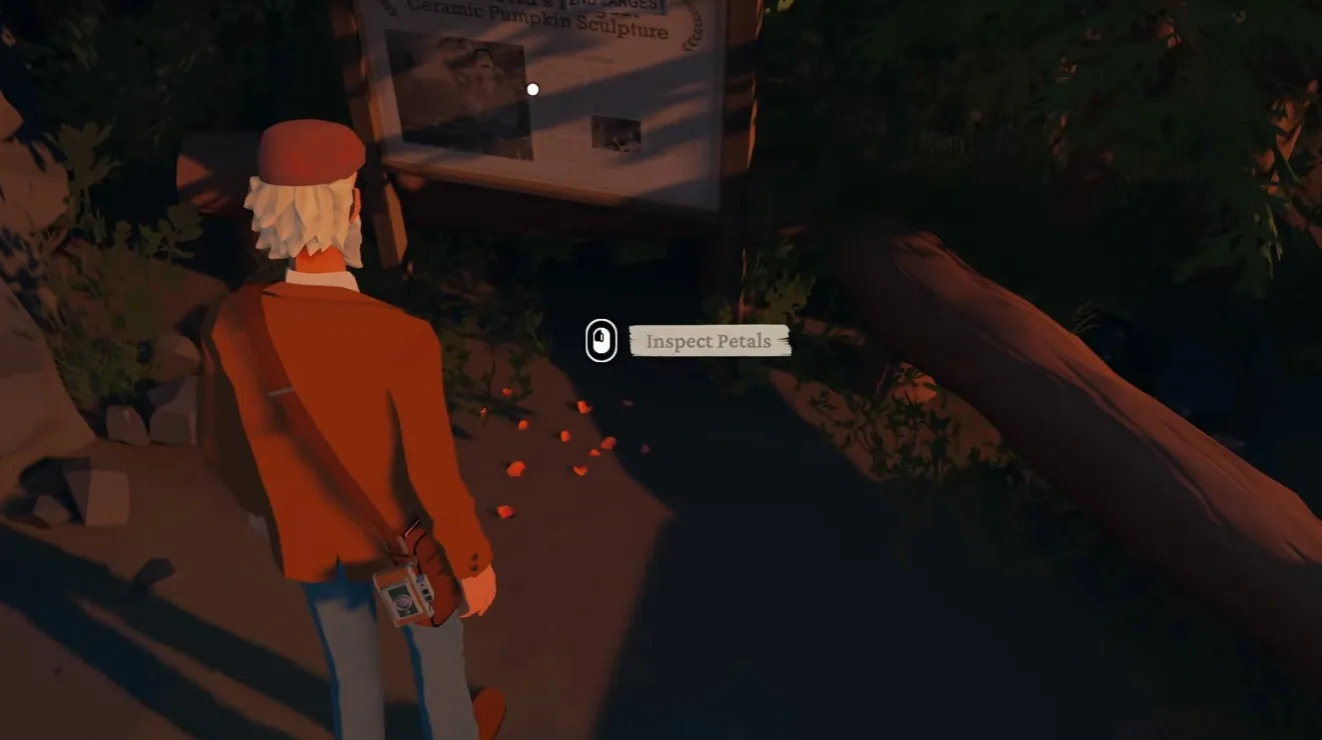
The display board and the sculpture serve different roles. The board makes the location easy to recognize; the petal interaction is the action that begins the memory search. A photograph of the board's text or of the large pumpkin can document the stop, but neither tells you that you completed the vignette.
Keep this memory separate from Fun & Colors. The two clusters occupy different landmark areas and have different names in the on-screen response. If you return from the playground and see a pumpkin-memory prompt, record it as a second local task rather than assuming it is the last playground petal.
The supported picture sequence identifies the information-board side and the large pumpkin itself. It does not provide a dependable direction for every intervening step, so use the accessible ground around those landmarks and the live prompt. Do not climb scenery or look for a distant pumpkin farm to solve this cluster.
Once the vignette unlocks, check the gathered-petal point and finish the camera interaction before leaving the display. A message that says a vignette is unlocked is the invitation to reveal it, not proof that you already captured its memory photograph.
Enter the mart and follow the shopping landmarks
Inside, speak to Milton and take the red basket near the entrance. Alfred's necessary supplies are cookies, replacement windshield wipers, and a road atlas. The shopping route gives you a useful way to explore the interior while taking photographs of subjects that interest you.
Head toward the right side of the store and continue to the far end for the windshield wipers. Cross to the food side for cookies. Find the road atlas around the toilet-paper section, where an old photograph hangs nearby. Obtain the actual items rather than merely photographing their display shelves.
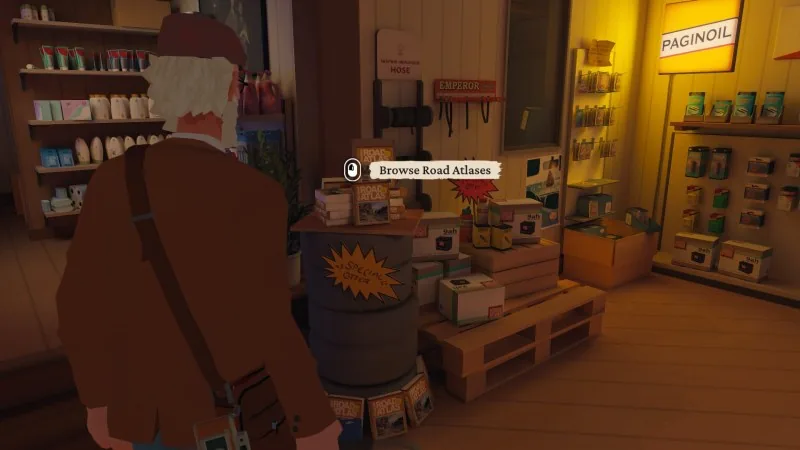
The atlas area is particularly easy to misunderstand because an old photograph and a purchasable object share the same part of the store. Looking at or photographing the old picture does not put the atlas in your basket. Use the browse or purchase interaction for the supplies, then return to photography if you want a visual record of the shop.
Do the interior exploration while you are still in the ordinary shopping portion of the stop. The checkout sequence leads into memories and a different scene state. If you have an exterior vignette or an interior subject you still want, it is clearer to finish those checks before starting the purchase at the counter.
This is a photo route, not a requirement to photograph every item the store sells. Choose distinct subjects that help you remember the stop. A shop interior, a meaningful object, and an exterior memory create different records; several nearly identical shelf pictures add less information to your journal selection.
Recognize the old-photo story transition
Return to the counter with the required supplies. The old-photo sequence interrupts the ordinary checkout and takes Alfred into the past. Continue the scene and the available route through the altered environment. When control returns to the present, take out the wallet and pay Milton.
The memory at checkout is a story transition. It should not be confused with a hidden photo puzzle that requires you to reproduce the image from the wall. If the scene has already changed, follow the available path and interactions until it returns to the transaction.
The shop sequence also explains why a screen can stop offering the same photography behavior you had while browsing. You have moved from a freely explorable store into a directed story segment. Taking additional pictures of the altered hallway is not the necessary shopping action. Finish the scene, then complete payment.
If your objective remains at the gas station, check the shopping state first. Confirm that the basket was taken, that all three necessary products were collected, and that the purchase was completed after the interruption. Exterior photographs alone cannot satisfy those tasks, however thoroughly you documented the stop.
Choose the campsite photographs deliberately
At the campsite, interact with the available photographs and arrange your journal record. This is the place to review the pictures you took during the stop. Finish the journal interaction before proceeding to the following day's drive.
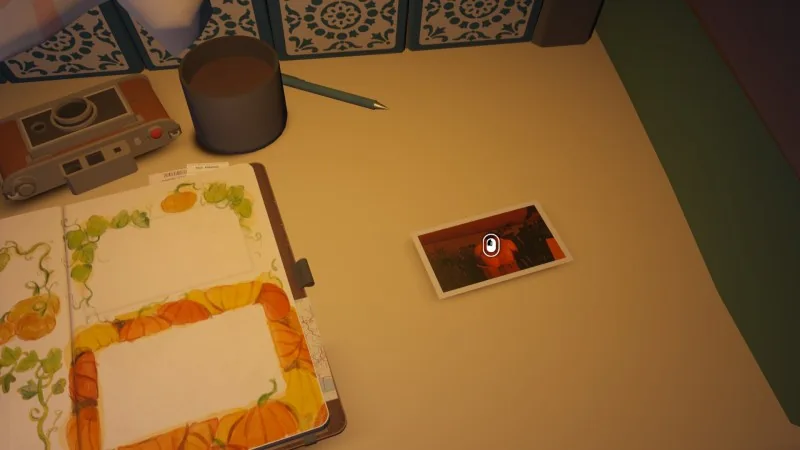
Think about what each picture contributes to the page. An exterior photograph establishes the stop; a shop detail captures Alfred's connection to the place; a vignette image records a particular memory. You can choose a varied group without treating the journal as a second location hunt.
The decision to keep a picture is separate from the decision to take it. A photograph can exist in the day's selection while you are still deciding what to place in the journal. If the game is waiting at the campsite, inspect the photograph-selection interaction rather than walking around looking for another required store subject.
Use the capacity shown in your current selection interface. Do not plan around a claimed universal film limit that the current screen does not show. The useful task here is to finish the day's journal handling with the photographs available to you, not to discover a secret way to carry an unlimited album.
Resolve a missed step by its stage
If Fun & Colors is incomplete, return your attention to the playground's swings, table, and slide. If the pumpkin memory is unlocked but unseen, locate its gathered-petal point. If the store purchase has not advanced, check the basket and required products. If you are already at the campsite, finish the journal interaction presented there.
This stage-based approach avoids repeating actions that belong to a different task. Photographing the pumpkin again cannot reveal a missing playground petal, and buying the atlas cannot finish a vignette photo. The relevant cue is the task currently shown on screen.
Before departure, make one final check of the stop's distinct outcomes: the exterior memory interactions you chose to pursue, any personal shop photographs you wanted, the completed purchase, and the campsite journal page. Chapter 2's main route continues once the story and journal steps are finished; optional photos remain separate choices rather than an invented mandatory total.