
A Forever Ago photo puzzle usually resolves when you photograph the right subject from the scene's intended position after its prerequisite interactions. At the diner, photograph the dog behind the bins for Maddy, then sit in the permitted booth and photograph the outside view. During the resort boat ride, take the prompted picture to enter the memory. At Winslow Lighthouse, read the entrance sign and photograph the top of the structure.
Optional petal vignettes have an additional step: inspect the local petals, find where they gather after the unlock message, and reveal the memory through the camera. A scenic photo taken before that sequence does not replace it. The solutions below concern those environmental camera actions, rather than a printed-photo jigsaw or a hidden code system.
Identify the kind of camera blockage
| What is happening | Likely unfinished stage to check | Useful next action |
|---|---|---|
| Alfred is calling from outside the opening room | The window pose photograph | Aim at Alfred outside, after finishing your room sweep |
| You have the opening instant picture in hand | Development or journal placement | Shake it, then place it in the journal |
| The diner booth remains restricted | Maddy's favor and report | Investigate the rubbish area, photograph the dog, return to her |
| You are seated at the diner booth | The outside-view photograph | Follow the camera prompt through the window |
| A petal counter is partial | The local cluster | Inspect remaining petals around the named landmark |
| A vignette is unlocked | The gathered-petal point | Find the gathering and use the memory camera action |
| The resort boat memory has begun | Coordinated rowing | Alternate strokes with Audrey |
| You have reached the lighthouse entrance | Sign and upper-lighthouse photograph | Read the sign, then aim toward the top |
Start with the unfinished stage. Taking more pictures is useful only when the camera subject itself is the remaining action. It cannot grant booth permission, inspect a petal, or place a physical photograph in the journal.
Opening room and Woolson Falls sequence
The opening teaches subject selection with the camera manual and nearby objects. Photograph the teddy bear on the bed and inspect the photo display and calendar around the study area before the window shot. When Alfred calls, photograph him posing outside to move into the car journey.
The useful order is room sweep, window photograph, drive, trail subjects, and final couple photograph. The room objects do not form a code whose order opens the window. The departure cue is Alfred's pose; keeping it last simply lets you finish the optional photography you want first.
During the drive, photograph the Woolson Falls sign when Alfred points it out. After arrival, crouch near the flowers, photograph Alfred's pose, and continue the sign-and-conversation sequence along the trail. Those actions belong to their current scene beats, so an earlier picture of Alfred does not automatically replace a later prompted pose.
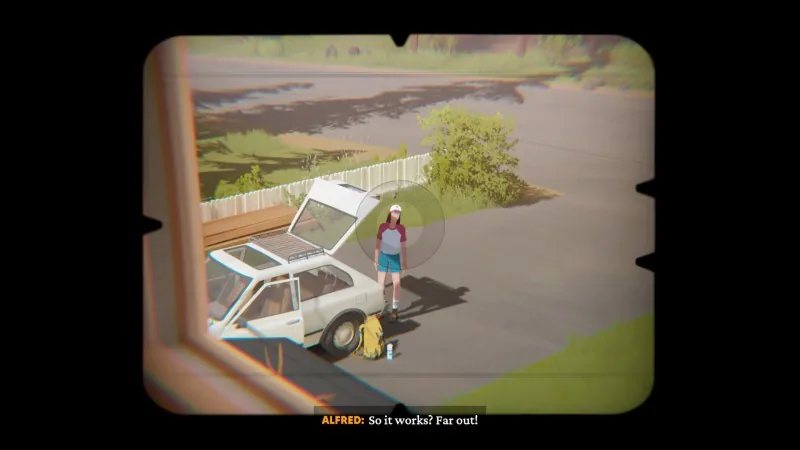
After Audrey hands over the camera, follow her in third person and continue the hike. At the endpoint, the couple photograph leads into the time change. If the camera ceases to be the active action, check the current walking or dialogue prompt rather than trying to solve the whole trail with repeated photos.
Finish the physical photo before searching again
The opening's last step is handling the instant picture. Shake it to develop the image, then open the journal and place it inside. The photo already exists. The task is to finish its presentation and storage.
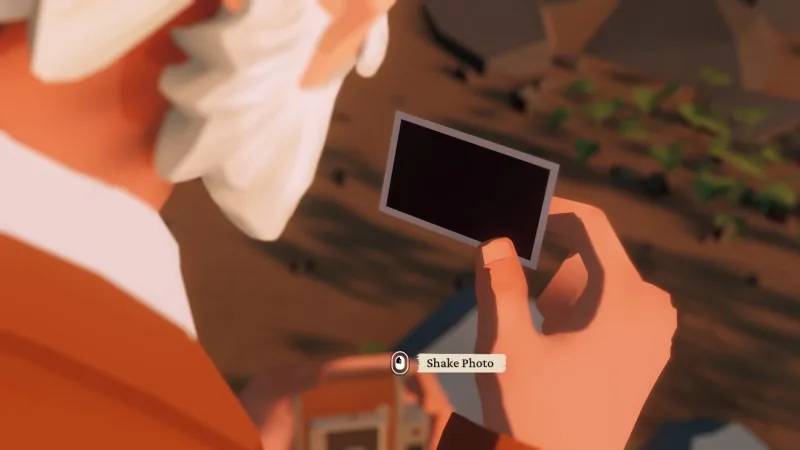
This distinction matters because a blank-looking instant print can seem like a failed exposure. In the sequence, development is the next interaction. Use the shaking prompt and wait for the image to appear before moving on to the journal.
If you have developed the picture but the chapter remains open, check journal placement. The two actions are not interchangeable. You can have a visible image in Alfred's hand while still needing to record it in the journal.
Do not restart the camera tutorial simply because the picture has not yet been placed. Identify the stage currently on screen and complete it. The game's photograph-handling step is separate from the act of aiming and pressing the shutter.
Diner access comes before the window shot
The Highway Star Diner scene includes three story activities: picking Audrey's flowers, playing her song, and using the booth. Find the flowers near the telescope through the fence by the van. Inside, choose Green Green Grass of Home by Patti Page on the jukebox, then check the booth.
The booth is restricted. Speak to Maddy at the counter, and complete the favor she gives Alfred. The camera puzzle is downstream of that conversation, so walking around the restaurant taking window photographs will not solve the access problem.
The flower pickup and the petal vignettes should also remain separate. The story flower patch is reached near the telescope. Optional petal memories use the motel pool and diner approach. A flower close-up cannot satisfy a pick interaction, and an inspected petal cannot replace the requested bouquet.
Once you understand which task is active, use the relevant action label. Pick the flowers, use the jukebox, speak to Maddy, investigate behind the building, and photograph the dog. This order resolves the access route without inventing a hidden membership item to find in a shop.
Photograph the dog and report the result
Leave the diner and turn right through the fence. Investigate the hole and rubbish area, then photograph the dog beside the bins. Frame the animal itself; the bin is a landmark, not the final subject.
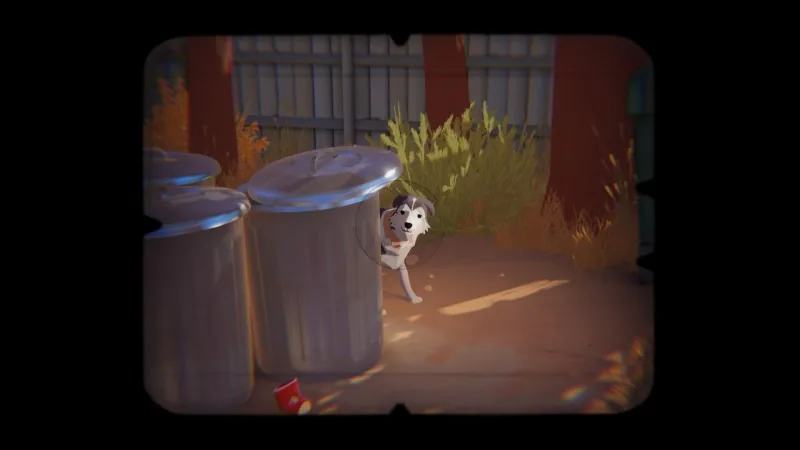
If you took a photograph before completing the investigation, check the ground and rubbish interactions first. Then bring the animal clearly into view and take the requested picture. A photograph of a fence, hole, or litter pile can show the area while missing the actual subject.
Return to Maddy and report what you found. That conversation gives access to the booth. The successful animal photograph does not remove the need to return inside, and waiting by the bins will not move Alfred automatically into the restaurant seat.
With permission obtained, sit at the booth. Follow the camera prompt and photograph the outside view through its window. The resulting transition into the past is the progress cue. Continue the memory route once it appears.
Solve the petal-vignette camera stage
A petal vignette begins with inspection. The on-screen name and fraction identify a local cluster. If the fraction is incomplete, search nearby landmarks for the remaining interaction. At the gas-station playground, those landmarks are the swings, picnic table, and blue slide with sandpit. At the diner, the pool and entrance clusters have different names.
After the vignette unlocks, the instruction changes to finding where the petals gather. Move to that point and use the camera to reveal the memory. The unlock message is not the final photograph, so do not leave as soon as it appears.
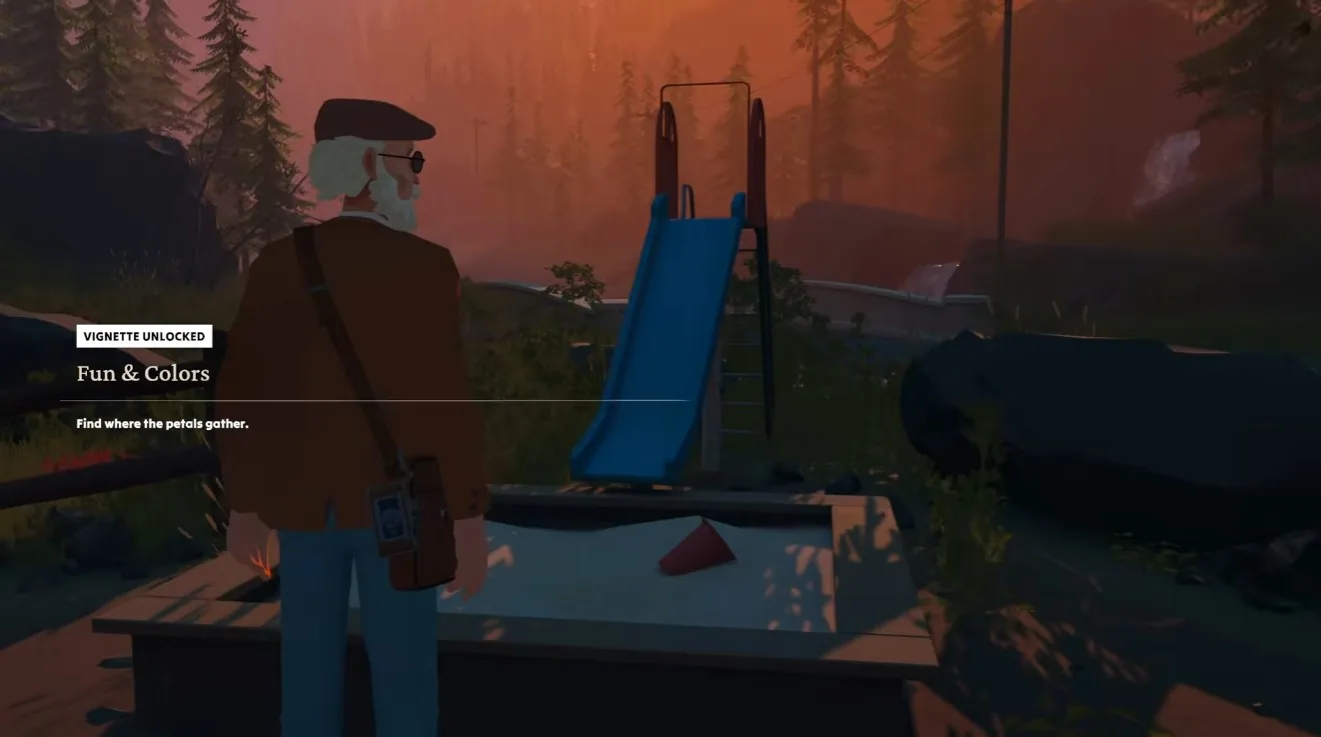
If you already photographed the scenery before gathering the petals, take that as a personal picture. It does not substitute for the camera action after the vignette becomes available. The necessary state change comes from collection and the gathering-point interaction.
A practical diagnostic is to keep the three states separate: a partial petal counter, an unlocked vignette, and a revealed memory. Each calls for a different next action. Searching the ground again after the unlock can be as unhelpful as repeatedly photographing a landmark while its petal count is still incomplete.
Resort boat photograph and rowing
At Buccaneers' Retreat, you need access to the boat before its photograph becomes relevant. Follow the resort route to the bolt cutter, use it for the locked areas, complete the arcade and souvenir-shop tasks, and continue by the parrot toward the docks. Cut the harbor lock and board the boat.
Take the photograph during the ride toward the island to enter the memory with Audrey. Once the memory starts, the task changes from photography to coordinated rowing. Wait for Audrey's stroke, then perform Alfred's, and repeat the alternating pattern toward the island.
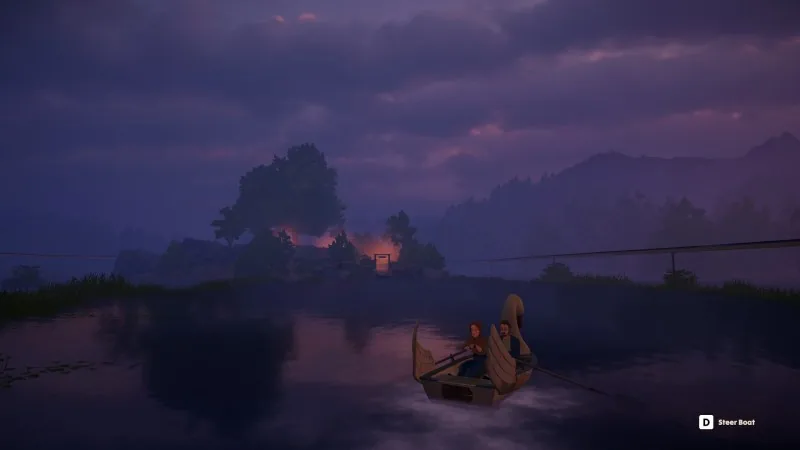
If the boat is not yet available, look at the access route and lock interactions. If the memory has already begun, look at the rowing rhythm. Neither state is solved by accumulating unrelated photographs of the resort.
The harbor also contains the Responsible Adults petal cluster. Finish its shore-side vignette separately before moving into the boat route if you intend to collect it. The shared location does not turn the optional petal memory and the required boat photograph into one action.
Lighthouse photo sequence
At Winslow Lighthouse, make the coffee and feed the dog before following Charles. When he sits, take the requested photographs. The camera view shifts automatically during that session, so keep responding to the current framing rather than walking around to find a new photography position.
Continue toward the lighthouse after the session. Read the entrance sign and allow the scene to play. Then aim at the top of the lighthouse and take the photograph that begins the memory. A general path photograph does not match the structure's upper section.
After the transition, enter the lighthouse and climb the stairs. The next stage is inside the memory, not another required landscape exposure outside. Treat the scene change as the sign that the photograph succeeded.
Use a small correction before repeating the whole sequence
For an unresponsive object or camera prompt, lower the camera, reposition slightly, and look at the intended subject or interaction surface again. Then check the current prerequisite: conversation, inspection, seat access, or journal action. This narrows the correction to the stage that is actually unfinished.
Do not erase progress to diagnose a missed frame. A clear subject mismatch calls for reframing; a locked area calls for its tool or access interaction; a changed scene calls for its new action. Following those cues solves the supported photo puzzles without inventing codes, film-saving penalties, or a universal secret angle for every photograph.