Forever Ago's camera achievements fall into two groups: total photographs and pictures of specific subjects. Focus Finder requires 25 photos, Picture Perfect requires 50, and Self-Portrait Photography requires 10 selfies. Snooping Shutterbug, Chrono Selfie, and It's A Bird, It's A Plane, It's Doggo instead require the correct object, companion, or camera mode in a particular scene.
Use both a count checklist and a subject checklist. Taking many scenery pictures will not replace a missed bedroom object or a selfie with Milton. Likewise, completing a required story photograph does not prove you have reached 50 photos. The journal keeps selected pictures, so its visible contents should not be treated as a complete record of every shutter press.
Match the remaining achievement to the right action
Before taking more pictures, check the locked achievement's description. A camera task can fail because of its subject, its mode, its location, or its total. These are different problems and should lead to different next steps.
| Achievement | Camera condition | What to check first |
|---|---|---|
| Focus Finder | Take 25 photos | Whether you have taken enough photographs |
| Picture Perfect | Take 50 photos | Whether you have reached the larger photo milestone |
| Self-Portrait Photography | Take 10 selfies | Whether the shots were actually taken in selfie mode |
| Snooping Shutterbug | Photograph every curious object in Alfred's room | Whether every relevant room subject was photographed |
| Chrono Selfie | Take a selfie with Milton | Whether Alfred and Milton were included in selfie mode |
| It's A Bird, It's A Plane, It's Doggo | Photograph Doggo instead of the bird's nest | Whether you aimed at the dog in the relevant sequence |
Glimpse Into The Past and Petal Collector also involve the memory system, but their requirements are vignettes rather than ordinary photo totals. Keep those searches separate. A missing vignette cannot be solved by taking another unrelated landscape picture.
Build the photo milestones during normal exploration
Focus Finder and Picture Perfect are straightforward counts: 25 and 50 photographs respectively. Use the camera during the journey instead of reserving it only for mandatory story prompts. The environments and character encounters provide natural opportunities to take additional pictures while you explore.
There is no requirement in those descriptions to produce 25 or 50 different named subjects. However, taking deliberate pictures is easier to track and gives you useful journal choices. Photograph objects and scenes you actually want to keep rather than pressing the shutter without noticing whether the camera is ready.
If a photo milestone has not unlocked by the end of the story, chapter replay lets you revisit a photographic location. Use it as a focused camera session and check the platform list afterward. This is more practical than starting a whole new journey solely because the ordinary photograph count is short.
Do not equate the local camera capacity with the achievement total. A scene can offer a limited set of current photos while the larger milestone concerns your photographic activity. Use the camera's actual controls for the current session and keep the 25- and 50-photo goals as separate completion checks.
Count selfies as their own activity
Self-Portrait Photography requires 10 selfies. Ten ordinary photographs of other characters do not satisfy that condition. Switch to the mode where Alfred appears in the camera's own frame, then take the photograph using that view.
The camera can show Alfred's expression choices, but the achievement does not ask for a set of ten different expressions. You do not need to turn the task into an unsupported pose checklist. The important distinction is that each picture is a selfie rather than a forward-facing shot of the surroundings.
If you discover selfie mode late in the journey, begin using it when the location permits. A selfie with a companion can be a useful memory, but the numerical milestone is separate from Chrono Selfie's specific companion requirement. Ten selfies elsewhere do not replace a selfie with Milton.
For a post-story return, complete a clear set of ten new selfie shots if the achievement is still locked. This avoids relying on an uncertain personal count from the first run. It is a practical cleanup approach, not a claim that every platform merges all camera counters identically across chapter jumps.
Snooping Shutterbug needs the opening room's objects
The opening photography sequence includes several curious objects in Alfred's room. Photograph the camera manual, teddy bear, wall photographs around the desk, and calendar before taking the photograph of Alfred outside the window that advances the scene.
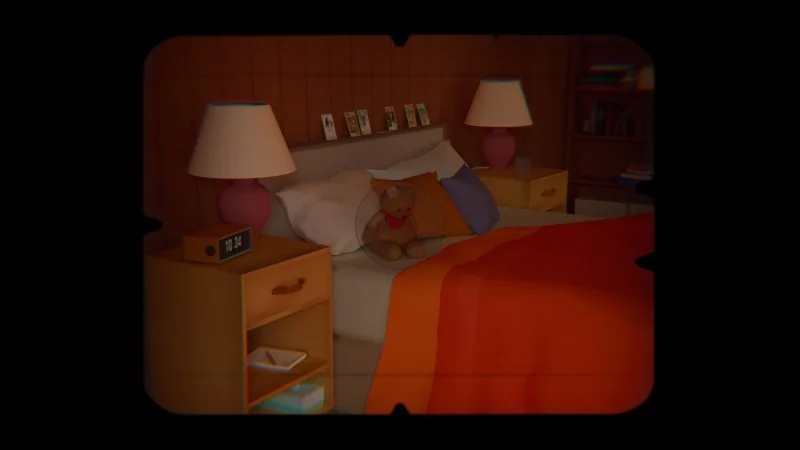
Use a room sweep: begin with the manual, turn toward the bed, then check the desk and wall area. Aim at each subject deliberately so you can tell which object has been photographed. Several shots of the same part of the bed do not resolve a missing calendar shot.
The achievement's wording is a complete subject set, not a general camera total. A later photograph of a teddy in another place would not replace the curious object in this opening room. If the achievement is missing after you leave, note the room as a replay target instead of trying to make up the difference with scenery.
Finish the room search before the portrait outside the window. Progression subjects are designed to move the sequence onward, and that can make an optional search inconvenient to recover immediately. Completing the object checklist first is the simplest ordering choice.
Chrono Selfie needs Alfred and Milton in the same shot
Milton is the cashier at Karl's Pump 'n' Mart. Chrono Selfie asks for a selfie with him, which means Alfred must appear in selfie mode and Milton must be part of the framed scene. A conventional portrait of Milton is a different kind of photograph.
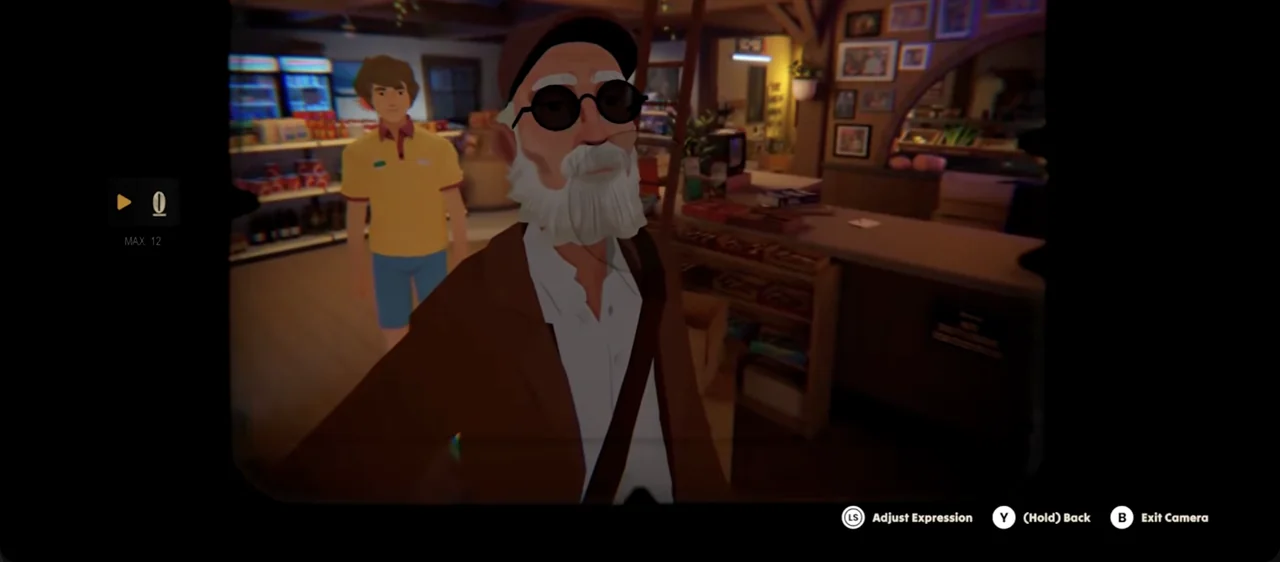
Stand where both characters can be framed, switch to selfie mode, and check the camera view before shooting. If the frame contains only Alfred, reposition so Milton is also included. If you are looking outward through the normal camera, change the mode rather than repeatedly taking the wrong type of photo.
The gas station is an early chapter, so you may pass it before becoming comfortable with selfies. After finishing the story, chapter select lets you return to Karl's Pump 'n' Mart for this specific task. Choose that return deliberately rather than using New Game, which overwrites the current save.
The optional shopping and dialogue achievements at Milton's store are separate. Buying every product or letting him finish his speeches does not replace the selfie. Handle the camera framing as its own check even if you are completing several tasks during the same visit.
Photograph Doggo during the bird's-nest sequence
It's A Bird, It's A Plane, It's Doggo has an unusual subject condition: take a photo of Doggo instead of the bird's nest. During the relevant lighthouse photography sequence, lower the camera toward the dog and take the shot.
The wording matters because the obvious scene setup draws your attention toward the nest. A carefully composed nest photograph can still be the wrong achievement action. Look at what the requirement asks you to include rather than assuming the most prominent subject is the correct one.
This is not the same as photographing Doggo for another story task earlier in the journey. The achievement refers to the nest sequence, so do not assume a random dog photo at the diner already covers it. Keep it on the location checklist until you perform the relevant photograph.
There are also dog achievements involving fetch and calls, but those are different interactions. Throwing three sticks or finding Doggo during the climb does not satisfy this camera condition. Identify the picture task on its own before moving to the next section of the journey.
Vignettes are memory completions, not spare scenery shots
Glimpse Into The Past asks for one vignette, while Petal Collector asks for all vignettes. Petal searches reveal these optional memories. Complete the local search and the revealed memory interaction instead of counting a normal photograph near the same place as a finished vignette.
The seven-vignette route has two around the gas station, two around the diner, and three at the resort. Those are separate from the required photographs that advance major story flashbacks. A main-story camera prompt can lead to a memory without completing an optional petal-led collectible.
If Petal Collector is the missing achievement, switch from a photo-count strategy to a memory checklist. Check which vignette name or local petal search is unfinished. More shutter presses will not resolve a missing memory, even though the camera is central to both parts of the game.
The journal is a selection of pictures
Alfred's journal lets you preserve photographs from the journey. At appropriate stops, you choose pictures to place in the album. This is a separate step from taking the photographs, so a page holding a few favorites is not evidence that you only captured a few pictures during the chapter.
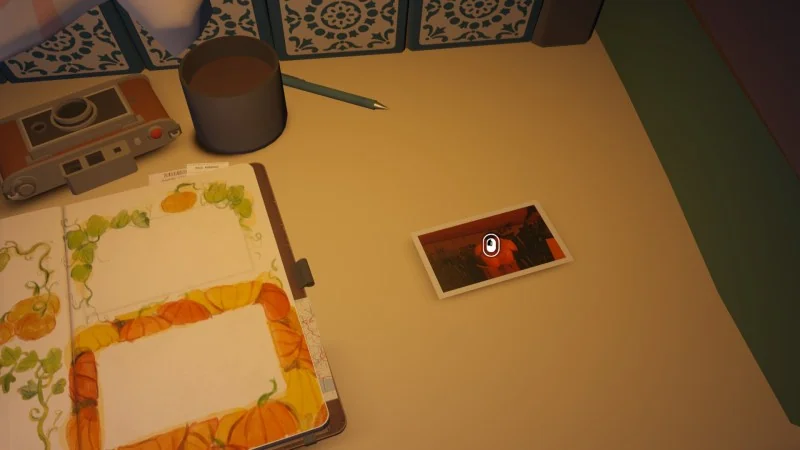
Do not use album capacity as a limit for the whole achievement run. Continue taking photographs while exploring, then choose which ones to keep when the journal interaction is available. The photo milestones ask for camera use; they do not ask you to fill every album position with a distinct achievement subject.
Similarly, the journal does not replace a subject checklist. Keeping a selfie of Alfred does not prove Milton is in it, and keeping a scenic dog picture does not prove it was taken during the bird's-nest moment. Review the exact condition when a specific camera achievement is still locked.
Diagnose the camera problem before repeating the shot
If a subject achievement does not unlock, first check mode and framing. Alfred alone in selfie mode is not a shared selfie; Milton alone in normal mode is not a selfie; and the nest is not Doggo. Fix the mismatch before taking another photograph.
If a numerical milestone remains locked, continue the relevant action count. For Self-Portrait Photography, take selfies. For Focus Finder or Picture Perfect, take photographs and check the larger total. Avoid trying to solve a missing number with a location search unless the locked achievement actually asks for a location-specific subject.
If a room or sequence task was missed, finish the story and use the corresponding chapter replay. Keep your cleanup session narrow: identify the locked requirement, return to its location, perform the correct action, and confirm it in the platform achievement list. That process gives each camera task a clear endpoint without mixing counts, memories, journal choices, and special subjects.