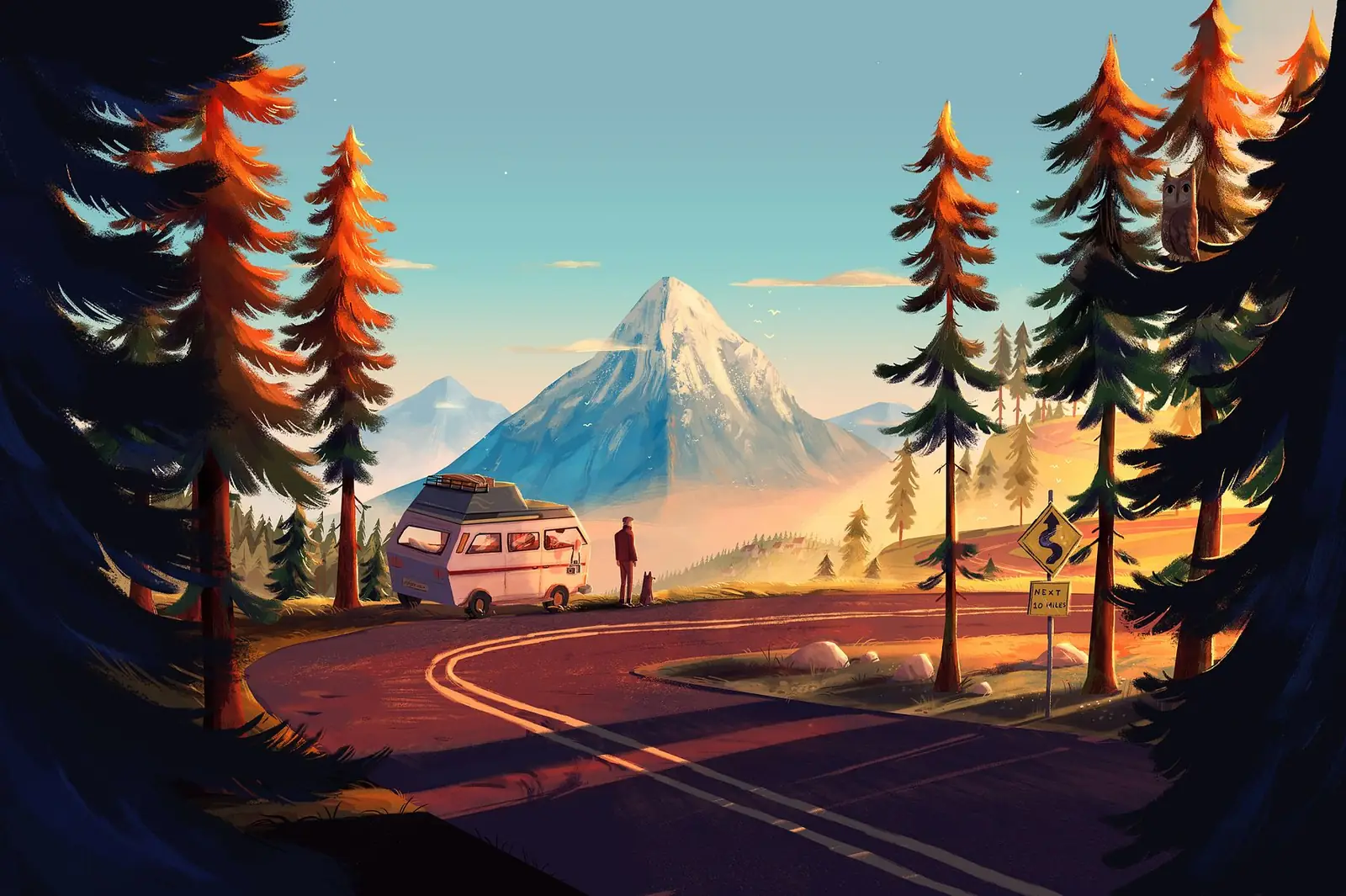
To finish Williamina Peak in Forever Ago, follow the story through the storm and dream passage, use the dog's tracks in the snow to find it, continue upward after the reunion, and complete the final interior memory. The closing actions include bringing Audrey soup, speaking with her, opening the drawer, and reading her final note in the journal.
This is a late-story walkthrough with major spoilers. The route below concentrates on the mountain sequence and its immediate conclusion. It does not turn the ending into a collectible checklist or assume that taking an extra photograph changes the required path.
Understand the sequence before searching the mountain
Williamina Peak combines several kinds of scene: a drive in bad weather, a dream passage, a search in the snow, an ascent, and an interior memory. Those changes in presentation can make the chapter feel less straightforward than an earlier roadside stop, even though the main route remains directed.
The practical goal changes as the sequence moves. During the drive, respond to the weather-related prompt. After the dream, locate the dog. After the reunion, follow the ascent. In the final memory, interact with Audrey and the objects in the room. You do not need to solve all those goals at once.
Keeping each goal separate helps avoid the most obvious confusion: looking for a dog while the story is still in a dream, or searching for an outdoor route when it has already transitioned into an interior. Let the visible scene tell you what kind of action is available now.
The chapter also carries the emotional conclusion of the journey. Dialogue and memory transitions are therefore part of finishing it, not interruptions to a mountain-navigation challenge. If you are moving through this section for the first time, give those passages time to complete before trying to regain ordinary exploration controls.
Respond to the storm during the drive
The weather worsens as Alfred drives. Increase the windscreen-wiper speed when the scene calls for it. Watch the current prompt instead of applying a button remembered from another interaction, because the driving sequence has a different immediate task from walking or taking photographs.
The story then leads into a crash. The required route continues through that event into a dream sequence; this walkthrough does not identify an alternate driving path that avoids it. Follow the transition rather than resetting on the assumption that the crash must be an ordinary gameplay failure.
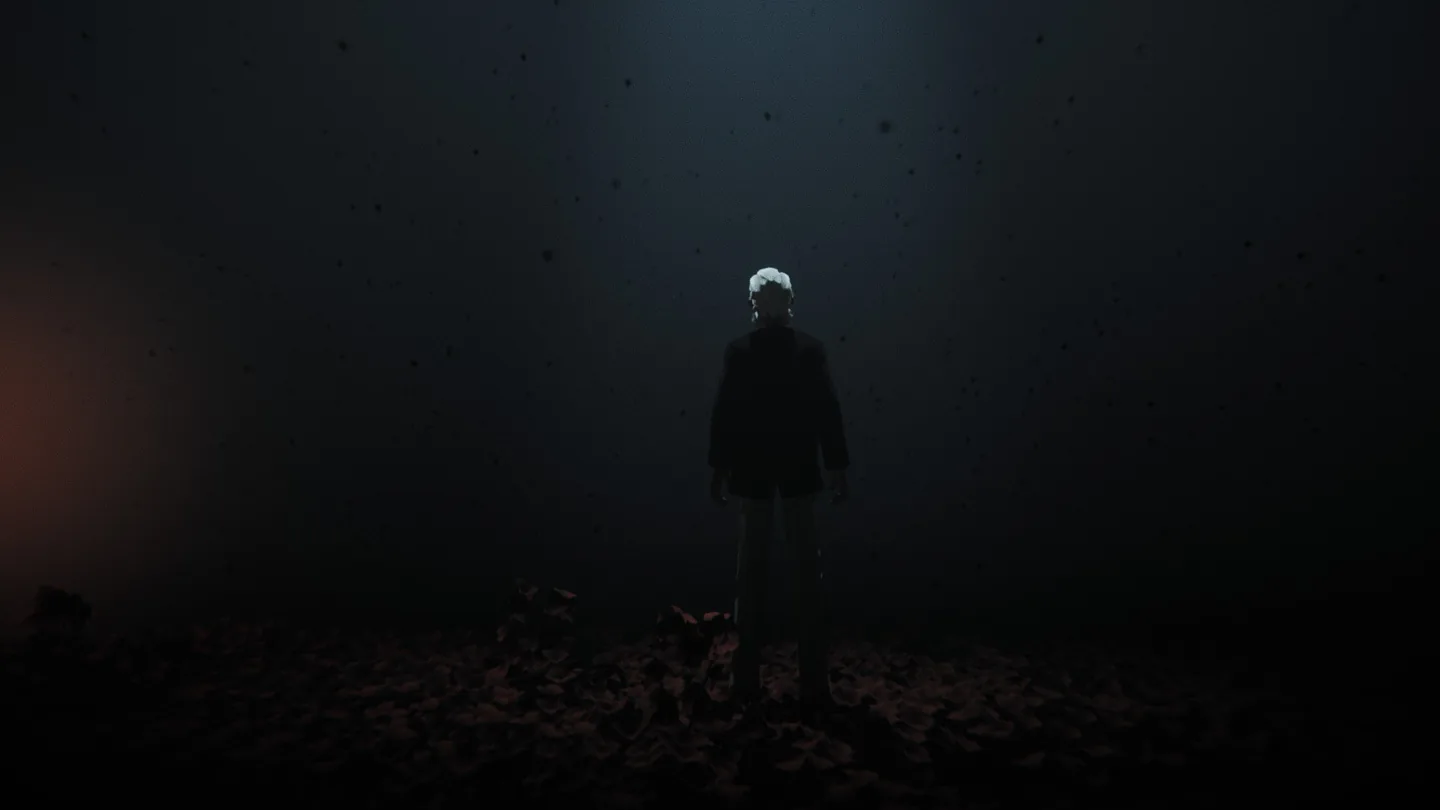
Within the dream passage, keep moving along the route the scene presents. The unusual surroundings belong to the story's memory structure. A missing view of the van or mountain landscape during that passage does not mean you have taken a wrong turn in the outdoor area.
Continue until the scene brings Alfred back to the snow. That is when the next practical goal begins. The drive and dream form the lead-in to the search; neither requires you to locate tracks before the game has placed you in the waking outdoor section.
Find the tracks immediately after waking
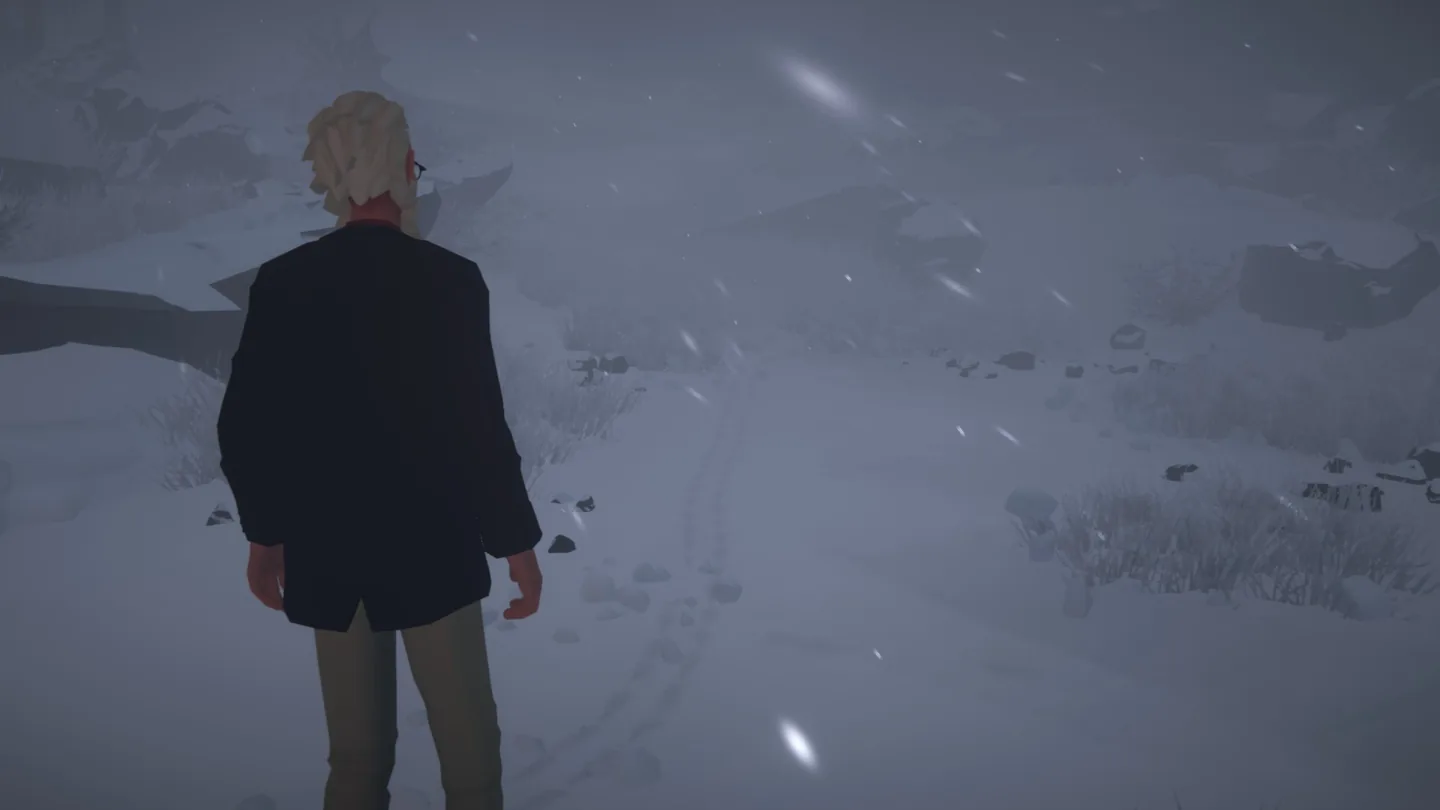
After Alfred wakes, look at the snow in front of him for the dog's tracks. They provide the direction for the search. Start by following this nearby evidence rather than turning back toward the earlier drive or assuming the dog must remain beside the van.
The snow changes the visual character of the route. Familiar colours and landmarks can be less useful than they were in warmer destinations, while the imprints provide a specific clue that belongs to this scene. Use them as the starting point for movement.
Call out to the dog while continuing the search. This is part of Alfred looking for his companion, and it keeps your attention on the current goal rather than on an optional photo subject. The route is about reuniting with the dog before continuing upward.
Do not interpret the lack of an immediate reunion as proof that you missed a collectible. The chapter first establishes the search and then asks you to proceed. Following the tracks and moving along the directed route are the relevant actions.
Continue when the tracks become harder to see
The tracks are the initial guide, but the route does not require a perfect uninterrupted trail of visible prints. If you lose sight of them, continue forward along the path. The next part of the search lies ahead rather than behind a separate hidden-petal condition.
Use the terrain and the established direction together. Keep going where the sequence allows movement instead of repeatedly circling the last print. Repeatedly returning to the starting area can make the search feel like a missing-coordinate problem even though the route continues linearly.
When you are uncertain, pause and look for the traversable space in front of Alfred. Resume from the direction the prints established. This is a navigation habit, not a claim that the chapter has a special compass, map marker, or track-highlighting ability.
Continue calling for the dog as you progress. Let the scene's responses and the changing route guide the search. There is no need to invent a fixed number of calls or a timer: the supported instruction is to keep searching forward until the reunion occurs.
Reunite with the dog before taking the ascent
The search leads to Alfred finding his companion. Let the reunion play out before treating the mountain as an area you can explore independently. The dog is the immediate purpose of the waking sequence, and the story uses that connection to move into the next stage.
After the reunion, proceed up the stairs toward the peak. This is the next directed route. The chapter changes from following evidence in the snow to ascending, so you can stop searching the earlier path for another set of tracks once the dog is with you.
The change in objective is useful if you have been moving cautiously. You are no longer trying to establish where the dog went; you are continuing the journey with it. Follow the stairs and the presented path rather than trying to repeat the search action indefinitely.
The ascent leads to another dreamlike passage. As before, a change in surroundings is intentional within the sequence. Continue walking forward until you reach the door at the end, then go through it to complete that passage.
Follow the final passage to the door
The chapter's repeated transitions can make a player hesitate over whether a room or corridor is real-time exploration, a flashback, or a dream. For progression, the immediate instruction remains simple: follow the route and interact at the end.
Keep walking through the final passage until the door becomes the next meaningful action. Do not assume that every unusual visual detail is a branch that must be investigated to unlock it. The walkthrough route reaches the door directly.
If you stop moving because the setting looks incomplete or fragmented, test the route ahead before returning. Earlier dream sections also use directed movement. Their visual style expresses memory and distress rather than presenting a conventional outdoor map.
Go through the door when the interaction becomes available. This brings the sequence into the final interior memory, where the chapter's action changes again. Your next task belongs to the room and Audrey, not to the snow outside.
Place the tray beside Audrey and bring her soup
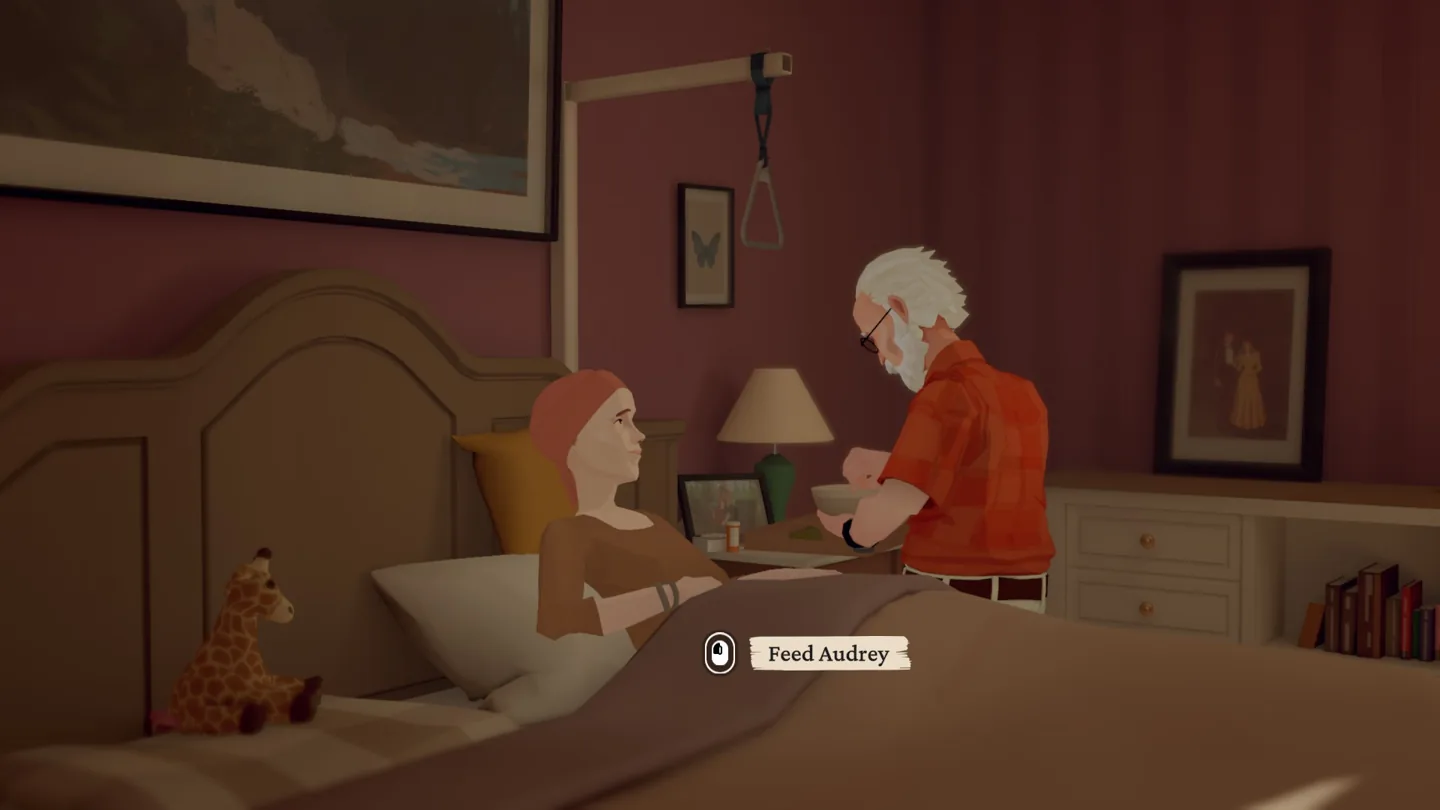
In the interior sequence, place the tray next to Audrey and feed her the soup. Follow the current interaction prompt for each action. An item being in Alfred's hands does not necessarily finish the scene; it still needs to be placed or used in the way the memory requests.
Treat the actions as an ordered interaction. First bring the tray into its position, then carry out the feeding action, and then continue the conversation. Trying to skip directly to the journal can leave the memory unfinished because the story is still attending to Audrey.
This is one of the chapter's most personal scenes. The small domestic actions connect the road trip with the final period of the couple's shared life. The mountain sequence does not conclude only by reaching an outdoor destination; it returns Alfred to a memory of care.
Let the conversation finish. The chapter needs this exchange before moving back to the journal. If ordinary exploration controls are restricted, remain with the active interaction rather than assuming you must locate another outdoor objective.
Open the drawer and read the final note
After the flashback ends, open the drawer and go through the journal. Read Audrey's final note. This is the closing journal action for the sequence, so do not leave it at merely opening the drawer if the note is still waiting to be examined.
The journal has guided the trip through earlier destinations. Here it also connects the final memory with Audrey's intention for Alfred's future. Finishing the note gives the chapter its narrative conclusion rather than another travel task to search for in the snow.
Give the transition after reading time to resolve. The sequence moves toward the epilogue, where ordinary actions at home replace the mountain's search and memories. A new setting at that point is part of the conclusion, not evidence that the final chapter failed to save a route choice.
The epilogue itself asks you to interact with objects in the house, make dinner in the kitchen, and go to play with the dog. Those actions come after Williamina Peak's final note. They are useful context for recognising that you have reached the story's closing domestic sequence.
Check the current stage if progress appears stalled
| Current scene | Relevant action | Avoid this mistaken assumption |
|---|---|---|
| Storm drive | Increase wiper speed when prompted | The crash must mean a failed route |
| First dream passage | Continue along the presented path | The outdoor tracks should already be visible |
| Snow search | Follow tracks, call, and continue forward | Every stretch must display clear prints |
| After the reunion | Take the stairs toward the peak | Another petal search is required to ascend |
| Final dream passage | Walk to the door and go through it | Each fragmented detail is a separate branch |
| Interior with Audrey | Place the tray, bring soup, and speak | Opening the journal can replace the memory actions |
| After the flashback | Open the drawer and read the final note | Opening the drawer alone finishes everything |
If an interaction prompt fails to appear, adjust Alfred's viewpoint and position. Prompt detection can require a clearer angle. If a conversation or scene transition is still active, let it end before trying the same action repeatedly.
The chapter's main route is compact, but its shifts between movement and memory are significant. Keep track of the latest completed event: crash, waking, reunion, door, conversation, or note. That event tells you which stage you have reached and makes the next required action easier to identify.